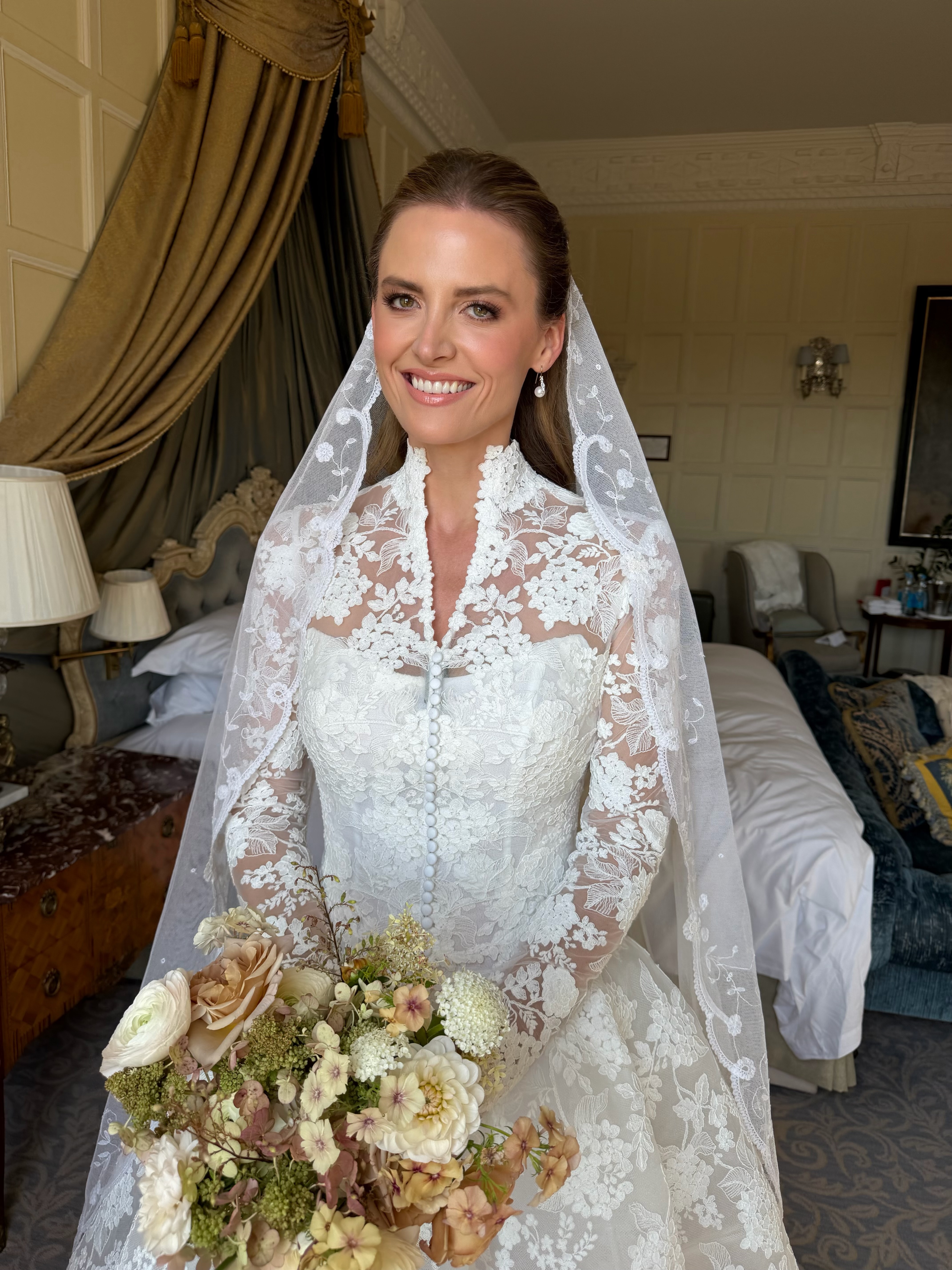
Planning a wedding is probably one of the first times in your life that you’ll enquire with several businesses offering what appears, on the surface, to be exactly the same thing — and receive completely different prices back.
- One photographer might charge £3,000 and another £10,000.
- One florist might work from a £5,000 starting point while another has a minimum investment of £25,000.
- One hair and makeup artist might charge £200 for bridal hair and makeup while another charges £600, £800 or more.
How can there possibly be that much difference? I completely understand it. I work within the wedding industry, but I’ve also planned my own wedding and experienced that moment when a quote lands in your inbox and you think: Oh. I wasn’t expecting that.
There is no universal wedding industry price list. No two weddings, businesses or couples’ priorities are the same. So I wanted to bridge that gap a little — not to tell you what you should spend, and definitely not to suggest that expensive automatically means better.
The price figures in this article are illustrations, not fixed industry rates or Louisa Jayne's current prices. Every wedding and every supplier is different.
The price you see is not what somebody is earning
If somebody sends you an invoice for £1,000, they are not putting £1,000 into their pocket. Your wedding team is largely made up of independent businesses and self-employed professionals. From that fee come the costs of delivering the service, followed by tax and everything else involved in running a business.
Those costs include:
- Equipment, products and stock.
- Insurance, tax and accounting.
- Travel to weddings and trials.
- Software, websites and marketing.
- Training and maintaining skills.
- Emails, proposals, contracts, invoices and timelines.
- Pensions, sick days, holidays and quieter months.
Take my own business. Before I arrive, my kit needs stocking, tools need maintaining, brushes need cleaning and new products need testing. None of those things suddenly appear on the wedding morning.
It is easy to think, “If I charge £300 and it takes three hours, that’s £100 an hour.” Except it isn’t. The preparation, expenses and unpaid work count too. As businesses develop, their prices have to reflect what it genuinely costs to keep providing that service. Otherwise they simply aren’t sustainable.
The difference isn’t always visible in a photograph
Experience isn’t simply a number of years. It’s the judgement, confidence and ability to prevent problems that come from doing the work. Weddings are live events. There isn’t another take.
Imagine two photographs of a French twist. Both are beautiful. From Instagram alone, you may not see why one artist charges £200 and another £600 or more. The difference may not be the French twist — it is the person creating it.
Can they:
- Adapt the style to different hair densities and textures, and make it last?
- Interpret an inspiration photograph for the person actually in their chair?
- Change direction confidently if the bride realises she doesn’t like something?
- Plan the bridal morning, manage a team and quietly adjust when timings slip?
- Remain calm, work alongside other suppliers and know when the bride needs reassurance — or five minutes of peace?
That knowledge is difficult to photograph. But on a wedding day, it can be invaluable. If you simply want beautiful hair and makeup, you may not need the most sought-after artist. If planning, reassurance and the wider experience matter to you, you are looking for something different.
Minimum investments, limited dates and demand
“But I don’t need £25,000 of flowers. Can’t they just do a smaller version?” Sometimes they can. Sometimes the answer will genuinely be no.
An established floral designer may have a recognisable creative identity and a business built around large installations. Their minimum investment reflects the scale of project they deliver, not necessarily a higher price for each flower.
There is also the reality of the diary:
- Suppliers have a limited number of dates, particularly peak-season Saturdays.
- Accepting one booking can mean turning another away.
- A photographer cannot personally photograph two weddings at once, and I can only personally provide bridal hair and makeup for one bride at a time.
- Some established suppliers deliberately take fewer weddings to give each one more planning time, flexibility and personalised attention.
If a floral designer typically books £25,000 projects, accepting a £10,000 wedding on a July Saturday commits that date. That isn’t greed. It’s capacity. As demand grows, pricing, minimum booking requirements and availability naturally begin to change.
Inspiration doesn’t show you the budget
Instagram and Pinterest show us spectacular weddings. Understandably, you save a photograph and think: I would LOVE our wedding to feel like that. But the photograph doesn’t tell you what it cost — or whether it came from a real wedding or a collaborative editorial shoot.
Behind that image may be:
- Thousands of flowers, structures and a team installing them.
- Lighting, furniture hire and production.
- A planner, transport and days of preparation.
- A budget very different from your own.
The inspiration may be free. Recreating it isn’t. Asking for “the same thing, just for half the price” may create a completely different result, rather than a smaller version.
Your venue is usually only the beginning too. Food, drinks, flowers, stationery, photography, music, hair and makeup, transport and accommodation all sit around it. More guests mean more than more meals: more tables, chairs, flowers, glassware and staff.
There isn’t one correct wedding budget or a rule saying every element should cost a fixed percentage. One couple may prioritise flowers; another may want an incredible party. Neither is wrong. Different things matter to different people.
Wedding planners and the team they recommend
A brilliant planner doesn’t simply recommend people whose Instagram accounts they like. They recommend businesses they trust. People who will:
- Communicate and turn up.
- Deliver what has been agreed.
- Solve problems and treat clients properly.
- Work well with the rest of the team.
I never underestimate what it means when a planner recommends me. They’re placing a little of their own reputation into my hands too.
Not every supplier serves the same market. Some businesses focus on accessible pricing and more weddings; others on destination celebrations or planner-led events. Multiple locations, welcome dinners, second looks, international travel and additional artists can change the entire service — not just its description.
Flowers and styling
Flowers are probably one of the most underestimated wedding costs. You see the finished installation, not everything required to create it:
- Consultations, mood boards and design work.
- Sourcing, ordering and conditioning flowers.
- Building mechanics, loading vans and travelling.
- Installation and managing a team.
- Returning after the wedding to dismantle everything.
A £15,000 floral quote may simply be what it costs that business to create what you’ve asked for. Ask shortlisted suppliers early whether they have a minimum investment. If their minimum and your budget are miles apart, it helps to know before either of you spends hours discussing ideas.
And then, of course, there is Hair & Makeup
From the outside, bridal hair and makeup looks like a few hours on the wedding morning. For me, the work begins long before that.
I want to understand who my bride is, what makes her feel beautiful, what makes her uncomfortable, and the overall feeling she’s creating. We trial, refine and make decisions. When I walk into the room on her wedding morning, she isn’t a stranger in my chair.
Alongside the hair and makeup, that can mean:
- Helping with a veil or an adjustment before photographs.
- Keeping an eye on timings.
- Reassuring my bride or supporting Mum.
- Quietly creating calm when the room becomes busy.
That relationship matters to me. I intentionally work with a limited number of brides because I want to be personally involved, with space to plan properly and make each bride feel looked after.
And not every bride needs that. Some simply want an artist to arrive, create beautiful hair and makeup and leave. There are fantastic artists offering exactly that. Comparing prices without comparing the actual service rarely tells you very much.
Look beyond the portfolio
Instagram is a wonderful place to discover suppliers, but it should be the beginning of your research, not the end. Read their website and reviews. Notice what previous couples repeatedly mention: calm, organisation, communication, creativity or how they handled a problem.
Then ask yourself:
- What really matters to us, and what is simply nice to have?
- Does this supplier’s work fit the wedding we want?
- What is actually included in their service?
- Do I trust this person and feel comfortable with them?
- Do I value what the difference in this service gives me?
I don’t think you should automatically book the most expensive supplier, or the cheapest. Create a needs versus wants list if that helps, and spend where you see value.
One final thought
The quote in your inbox doesn’t tell the whole story. Neither does the Instagram photograph or the finished French twist. The real value is often in everything you don’t see: the judgement, preparation, reliability and business behind the person.
Research well. Ask questions. Choose the people whose work, service and approach feel right for your wedding. When you’ve built the right team around you, you shouldn’t need to spend your wedding day managing them. You should simply be able to enjoy it.
Louisa x